
This Louisiana history timeline traces the state from ancient Indigenous peoples through French colonization, Spanish rule, the transformative Louisiana Purchase of 1803, and statehood in 1812.
Indigenous Peoples and French Colonization
The Louisiana territory has been home to Indigenous peoples for millennia. The Mississippian culture flourished in the lower Mississippi Valley before declining around 1500 CE, leaving mound complexes and settlements that fascinated later European observers. When Europeans arrived, the region was inhabited by diverse nations including the Choctaw, Chickasaw, Natchitoches, and others, who had developed complex societies adapted to the Mississippi River system and coastal regions. French exploration transformed Louisiana’s history. In 1682, Robert Cavelier, Sieur de La Salle, descended the Mississippi River to the Gulf of Mexico and claimed the entire valley for France, naming it Louisiana in honor of King Louis XIV. Over the next four decades, the French established settlements, trading posts, and forts throughout the region, creating a network of French colonial influence that stretched from present-day Canada to the Gulf of Mexico.
Spanish Rule and American Acquisition, 1762–1803
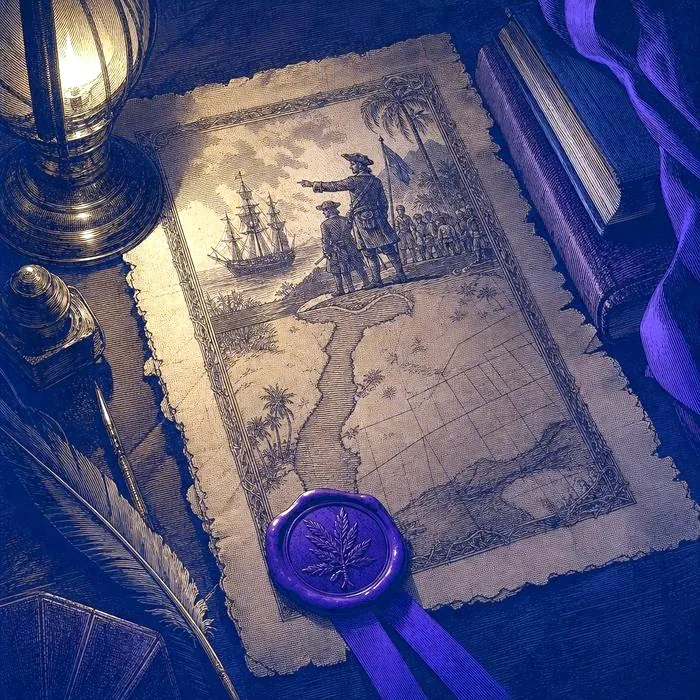
Following the Seven Years’ War, France ceded Louisiana to Spain through the Treaty of Fontainebleau in 1762. Spanish rule lasted four decades, during which the territory’s economy and population slowly grew. However, French cultural influence remained strong; the population continued to speak French, practice Catholicism, and maintain French legal and social traditions. Spain struggled to develop and control the vast territory and ultimately ceded it back to France in 1800. The pivotal moment came when France, under Napoleon, sought to rebuild its American empire but faced rebellion in Haiti and strategic limitations. In 1803, Napoleon sold the entire Louisiana territory to the United States for 15 million dollars: approximately 828,000 square miles. The Louisiana Purchase, negotiated by President Thomas Jefferson, doubled the size of the United States and opened vast territories to westward expansion. It stands as one of the most consequential real estate transactions in world history.
American Louisiana and Statehood
The Louisiana territory entered American hands in December 1803, but governing and organizing it took time. The region’s population was diverse: French colonists, Spanish officials, enslaved Africans, free people of color, and Indigenous nations all inhabited Louisiana. In 1804, the territory was divided into two administrative regions. The southern portion, closest to New Orleans, was organized as the Territory of Orleans. New Orleans itself was rapidly Americanized, though French influence remained deep in its architecture, language, and cultural practices. On April 30, 1812, Louisiana became the 18th state, the first to be admitted from the Louisiana Purchase territory. Its statehood marked the beginning of American settlement and development of the vast western lands opened by the Purchase. Today, Louisiana remains culturally distinctive, with French place names, Creole and Cajun cultures, and a unique blend of French, Spanish, African, and American influences that shaped its society and economy around the Mississippi River and Gulf Coast.
Frequently Asked Questions
What was the significance of the Louisiana Purchase?
The Louisiana Purchase of 1803 doubled the size of the United States and opened vast western territories to American expansion. The 828,000-square-mile territory, purchased for 15 million dollars, fundamentally changed the nation's geography and enabled westward settlement.
How long did France and Spain control Louisiana?
France colonized Louisiana beginning in 1682 and controlled it until 1762. Spain then ruled for four decades (1762–1800) before France reacquired it briefly before selling it to the United States in 1803. French cultural influence remained strong throughout Spanish rule.
What makes Louisiana's culture distinctive?
Louisiana's culture is shaped by centuries of French and Spanish colonial rule combined with African, Caribbean, and Native American influences. This blend created Creole and Cajun cultures, French place names, Catholic traditions, and unique food and music that distinguish Louisiana from other American states.
Why was New Orleans so important to Louisiana and the nation?
New Orleans, founded in 1718, controlled access to the Mississippi River and the Gulf of Mexico, making it strategically and economically vital. The city served as the gateway for trade, settlement, and westward expansion, and remains a major port and cultural center.