
This California history timeline of events traces the state’s development from thousands of years of Indigenous civilization through Spanish and Mexican rule, the Gold Rush, and American statehood, sourced and dated so it can be cited with confidence.
Indigenous Nations and Spanish Colonization
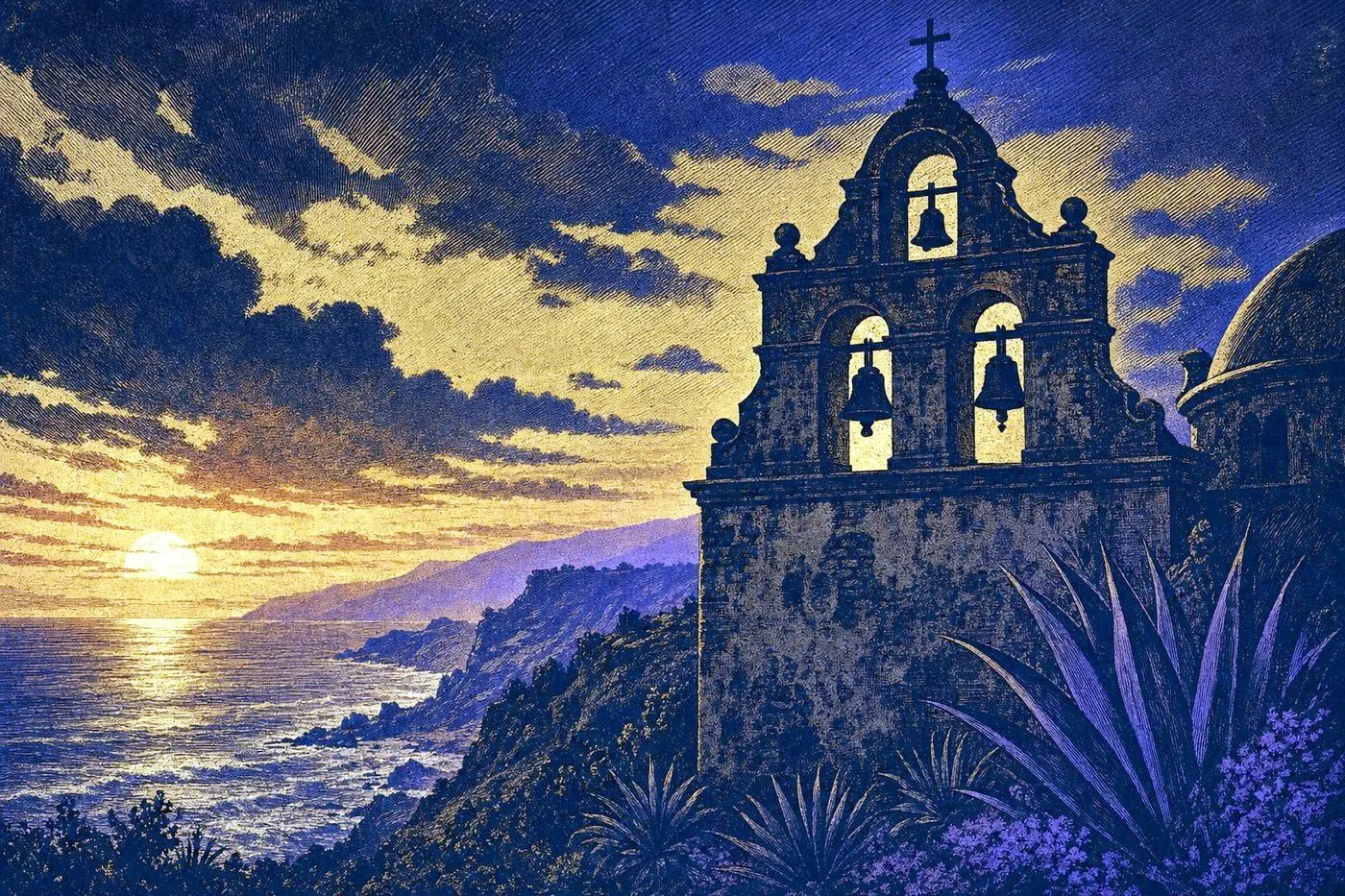
Long before European contact, the region that became California supported one of the largest and most linguistically diverse Indigenous populations anywhere in North America: historians estimate a pre-contact population in the hundreds of thousands, organized into small, largely village-based societies rather than large centralized states, and speaking well over a hundred distinct languages. Peoples including the Chumash, Ohlone, Miwok, Pomo, and Yurok developed sophisticated systems for managing the region’s varied environments, from coastal fishing economies to acorn-based inland economies. The first recorded European contact came in 1542, when Juan Rodríguez Cabrillo, sailing for Spain, explored the coastline near present-day San Diego Bay, though sustained Spanish settlement did not follow for more than two centuries. That changed in 1769, when the Franciscan friar Junípero Serra founded Mission San Diego de Alcalá, the first in a chain of 21 missions eventually built along El Camino Real. The mission system reshaped Native life across coastal California: it brought forced labor, forced conversion, and imported diseases against which Indigenous Californians had no immunity, contributing to sharp population decline in the areas under mission control.
Mexican Rule, War, and the Road to Statehood
Mexico’s independence from Spain in 1821 brought California under Mexican governance as the territory of Alta California, administered from a distant capital and only loosely connected to central authority. Through the 1830s, the Mexican government secularized the missions, redistributing much of their land to private rancho grantees and reshaping California’s economy around cattle ranching and hide-and-tallow trade. American interest in the territory grew steadily, and in 1846, amid rising tensions, American settlers in Sonoma staged the short-lived Bear Flag Revolt, declaring an independent California Republic just as the Mexican-American War broke out. The war’s end came with the Treaty of Guadalupe Hidalgo in February 1848, under which Mexico ceded California, along with a vast swath of the present-day American Southwest, to the United States. The timing proved extraordinary: just days before the treaty was signed, carpenter James W. Marshall discovered gold flakes in the tailrace of a sawmill he was building for John Sutter near Coloma, a discovery that would remake California within a matter of months.
The Gold Rush and the Birth of a State
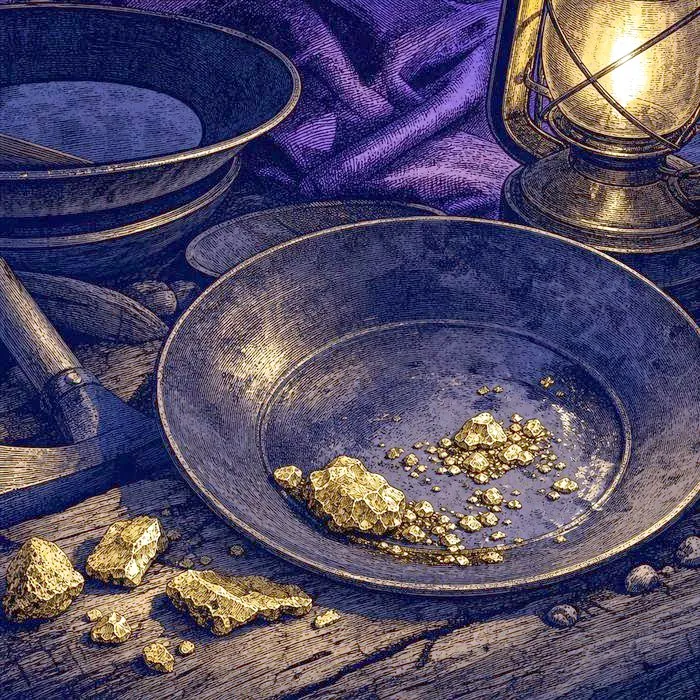
News of Marshall’s discovery spread rapidly, and by 1849 tens of thousands of prospectors, known as the “forty-niners,” had poured into California from across the United States and around the world, swelling the non-Native population from roughly a few thousand to well over 100,000 within a few years. The Gold Rush built the foundations of California’s economy and its largest cities, but its human cost for Indigenous Californians was severe: historians have documented a catastrophic population collapse during this period, driven by disease, displacement from traditional lands and food sources, and violence that included state-funded militia campaigns and, under an 1850 state law, the forced indenture of Native people. In 2019, the state of California formally apologized for this history. Statehood followed swiftly: bypassing the usual territorial stage entirely, California was admitted to the Union on September 9, 1850, as the 31st state and, under the terms of the Compromise of 1850, as a free state. In the decades that followed, the completion of the transcontinental railroad in 1869, the growth of large-scale agriculture, and, in the 20th century, the rise of Hollywood, aerospace industries, and Silicon Valley’s technology sector transformed California into the most populous US state and one of the largest economies in the world.
Frequently Asked Questions
What does this California history timeline cover?
This California history timeline of events covers the state's development from thousands of years of Indigenous civilization through Spanish missions, Mexican territorial rule, the Mexican-American War, the Gold Rush of 1848–49, and admission to the Union as the 31st state in 1850.
When did California become a US state?
California was admitted to the Union on September 9, 1850, becoming the 31st state. It entered as a free state under the terms of the Compromise of 1850, and uniquely bypassed the usual territorial stage.
What triggered the California Gold Rush?
The Gold Rush was triggered by James W. Marshall's discovery of gold at Sutter's Mill in Coloma in January 1848. News spread quickly, and by 1849 tens of thousands of prospectors had migrated to California, dramatically transforming its population and economy.
How did the Gold Rush affect Native Californians?
The Gold Rush era brought a catastrophic decline in the Native Californian population through disease, displacement, and violence, including state-funded militia campaigns and forced indenture under an 1850 state law. In 2019, California's governor formally apologized on behalf of the state for this history.